
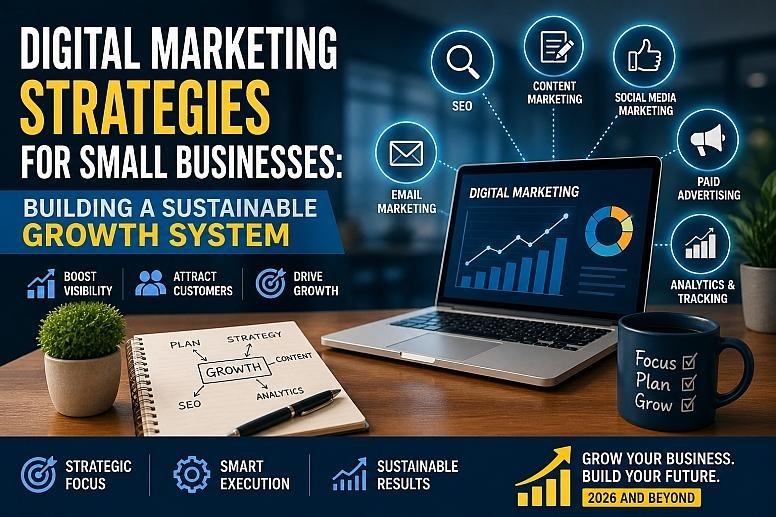
For small businesses, digital marketing is no longer just a promotional channel; it is the foundation of sustainable growth. As customer journeys increasingly begin online, visibility, trust, and engagement across digital platforms directly influence whether a business thrives or struggles to compete.
The challenge, however, is not access to digital tools but knowing how to use them effectively. With countless options across SEO, content marketing, social media, and paid advertising, many small businesses face fragmentation rather than clarity in their marketing efforts. Limited resources only intensify the need for strategic focus.
This guide breaks down a structured approach to building a digital marketing strategies for small businesses designed specifically for small businesses in 2026. Instead of isolated tactics, the focus here is on creating an integrated growth framework that supports visibility, customer acquisition, and long-term retention.
1. Establishing the Foundations of Digital Marketing
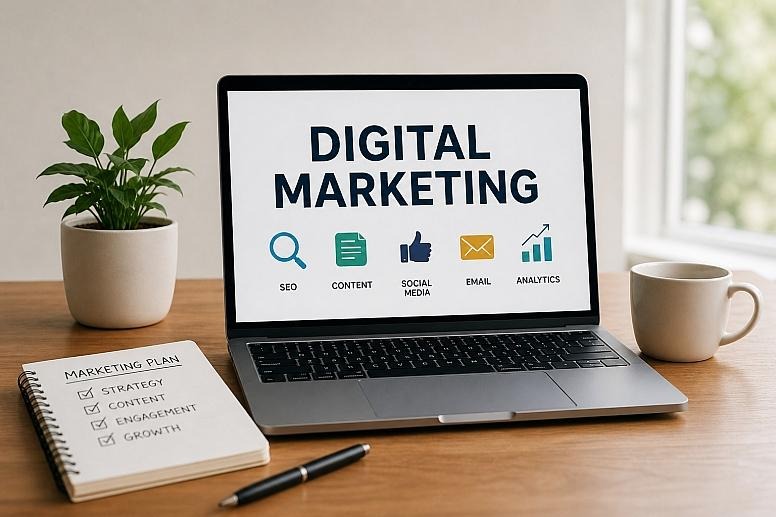
Digital marketing refers to all online activities used to promote products and services and engage target audiences. These channels include search engines, social media platforms, email systems, and paid advertising networks.
For small businesses, effectiveness comes from focus rather than volume. Instead of attempting to maintain a presence everywhere, success depends on selecting channels aligned with audience behavior and business objectives.
Core Components of Digital Marketing
- Search Engine Optimization (SEO): Increasing visibility in organic search results
- Content Marketing: Building trust through valuable information
- Social Media Marketing: Engaging and growing audiences across platforms
- Email Marketing: Strengthening customer relationships over time
- Pay-Per-Click Advertising: Driving targeted traffic through paid campaigns
When these elements work together, they form the foundation of a scalable digital growth system that supports long-term business expansion rather than short-term wins.
2. Building a Cohesive Online Presence
A business’s website and digital footprint act as its primary point of credibility. Without a clear and consistent online presence, even strong products or services may struggle to gain traction.
Key Elements of a Strong Online Presence
- Responsive design: Seamless experience across all devices
- Fast performance: Improved user experience and search visibility
- Clear branding: Unified messaging across all channels
Beyond foundational setup, efficiency becomes a competitive advantage. Businesses can also streamline their digital operations by leveraging digital solutions that improve workflow and productivity. For instance, platforms like Toolonic provide access to a variety of free online tools designed to simplify everyday business tasks and enhance productivity.
A cohesive online presence builds trust before a customer even makes contact and strengthens brand recognition across multiple touchpoints.
3. Search Engine Optimization (SEO) for Visibility
SEO is one of the most cost-effective strategies for driving organic traffic. By optimizing your website and content for search engines, you increase your chances of appearing in relevant search results.
Important SEO Practices
- Keyword Research: Identifying terms your target audience is searching for
- On-Page Optimization: Using keywords naturally in titles, headings, and content
- Technical SEO: Improving site speed, structure, and indexing
Local SEO is particularly valuable for small businesses. Optimizing your Google Business profile and targeting location-specific keywords can significantly improve visibility within your community and drive high-intent traffic.
Consistency and patience are key; SEO results build over time but deliver long-term compounding benefits.
4. Content Marketing That Drives Engagement
Content marketing focuses on creating valuable, relevant, and consistent content to attract and retain a clearly defined audience. High-quality content not only improves SEO but also establishes authority and builds trust.
Effective Content Strategies
- Blog posts that answer customer questions
- Guides and tutorials that provide step-by-step value
- Visual content such as infographics, images, and videos
As digital content evolves, businesses are increasingly incorporating AI-powered tools to enhance creativity and efficiency. Understanding how to use modern creative technologies can significantly improve output quality and speed. A deeper exploration of this topic can be found here: AI-generated art techniques.
By consistently delivering value, businesses can build stronger emotional and informational connections with their audience.
5. Leveraging Social Media Marketing
Social media platforms provide an opportunity to engage directly with your audience, build brand awareness, and drive traffic to your website.
Best Practices
- Choose platforms where your audience is most active
- Post consistently with a mix of educational and engaging content
- Engage actively through comments, replies, and conversations
Balancing organic content with targeted advertising expands reach while maintaining authenticity and trust.
6. Email Marketing for Customer Retention
Email marketing remains one of the most effective channels for maintaining customer relationships and driving repeat business.
Key Strategies
- Building a quality and engaged email list
- Personalizing content based on user behavior
- Using automation for consistent communication
Well-structured email campaigns nurture leads, promote offers, and strengthen long-term customer loyalty.
7. Paid Advertising for Quick Results
While organic strategies build long-term value, paid advertising offers immediate visibility and scalability.
Optimization Tips
- Start with a controlled and measurable budget
- Test multiple ad creatives and formats
- Continuously monitor and refine performance
When executed properly, paid advertising complements organic marketing and accelerates growth.
8. Data Analytics and Performance Tracking
Measuring performance is critical to understanding what works and what doesn’t. Data-driven decision-making enables continuous improvement.
Key Metrics
- Website traffic and engagement
- Conversion rates
- Customer acquisition cost
- User behavior patterns
Tools like Google Analytics provide actionable insights that guide optimization and strategy refinement.
9. Common Mistakes to Avoid
- Relying on a single marketing channel
- Ignoring SEO fundamentals
- Inconsistent content publishing
- Failing to use analytics for decisions
Avoiding these mistakes significantly improves long-term marketing performance and efficiency.
10. Future Trends in Digital Marketing
Key Developments
- Artificial intelligence-driven marketing automation
- Voice search optimization
- Hyper-personalized customer experiences
Businesses that adopt these trends early will gain a strong competitive advantage in increasingly crowded markets.
Conclusion
Digital marketing is an interconnected system rather than a set of isolated tactics. When SEO, content, social media, email, and paid advertising work together, they create a powerful and scalable growth engine.
Success in 2026 depends on consistency, adaptability, and data-driven decision-making. By applying the strategies outlined in this guide, small businesses can build a resilient digital presence capable of long-term growth and stability.