
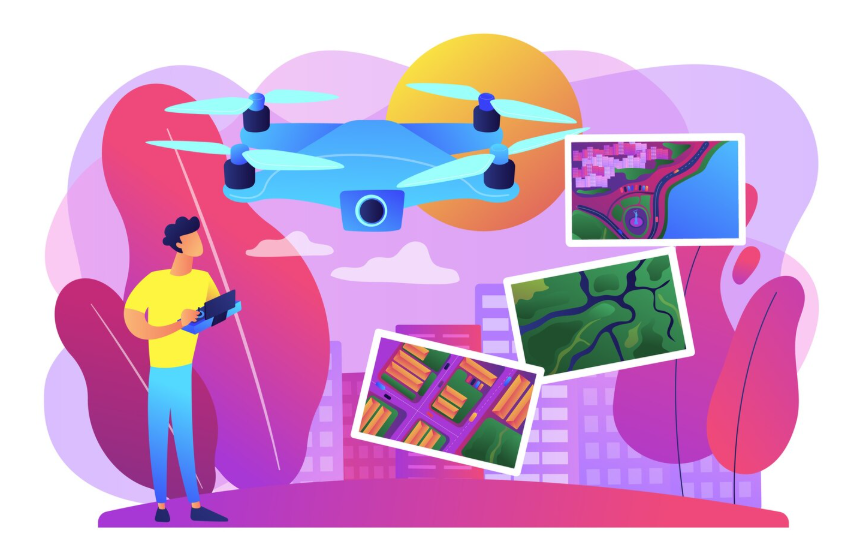
Drone photography has rapidly moved from a niche hobby to a powerful commercial tool. What once required helicopters, expensive equipment, and large production crews can now be achieved with compact drones operated by skilled pilots. For businesses across industries—real estate, construction, tourism, agriculture, and events—drone photography is reshaping how stories are told, how properties are sold, and how brands are presented to the world.
This article explores how drone photography works in a business context, its key benefits, practical applications, photo prints, challenges, and what companies should consider when integrating aerial visuals into their marketing strategy.
What Is Drone Photography?
Drone photography refers to the use of unmanned aerial vehicles (UAVs), commonly known as drones, equipped with high-resolution cameras to capture images and video from the air. These drones can fly at various altitudes and angles, offering perspectives that were previously difficult or impossible to achieve.
Modern commercial drones, such as those produced by DJI, are equipped with advanced stabilization systems, GPS positioning, obstacle avoidance sensors, and 4K or even 8K cameras. This allows operators to capture smooth, cinematic footage suitable for professional marketing and advertising.
Why Drone Photography Matters for Businesses
The biggest advantage of drone photography is perspective. Humans are naturally drawn to visuals that show scale, environment, and context. Aerial imagery provides all three simultaneously.
For businesses, this translates into several key benefits:
1. Enhanced Visual Storytelling
Traditional photography is limited to ground-level views. Drone photography adds a new dimension by showing how a business fits into its surroundings. For example, a hotel can showcase its beachfront location, surrounding landscape, and amenities in one sweeping shot.
This storytelling capability helps brands communicate more than just what they offer—it shows experience, atmosphere, and value.
2. Increased Marketing Engagement
Studies consistently show that visual content outperforms text-based content in digital marketing. Drone footage, in particular, performs well on social media platforms like Instagram, YouTube, and TikTok because it is dynamic and visually striking.
Businesses using aerial content often report higher engagement rates, longer viewer retention, and improved conversion rates compared to standard photography.
3. Competitive Advantage
In saturated markets, differentiation is crucial. A real estate listing with aerial views immediately stands out against competitors using only standard interior and exterior photos. Similarly, tourism companies using cinematic drone footage can inspire potential travelers more effectively than static images alone.
4. Cost Efficiency Compared to Traditional Aerial Methods
Before drones became widely available, aerial photography required helicopters or cranes, which were expensive and logistically complex. Drones drastically reduce these costs while offering more flexibility and faster setup times.
Key Business Applications of Drone Photography
Drone photography is versatile and can be applied across multiple industries. Here are some of the most impactful use cases:
Real Estate and Property Marketing
Real estate is one of the largest adopters of drone photography. Aerial shots help showcase property size, layout, landscaping, and proximity to nearby infrastructure such as schools, roads, or water bodies.
Luxury properties, in particular, benefit from cinematic drone videos that highlight exclusivity and surroundings. This often leads to faster sales and higher perceived value.
Construction and Infrastructure
In construction, drones are used for site monitoring, progress tracking, and project documentation. Instead of manual inspections, project managers can use aerial images to assess development stages, identify potential issues, and communicate progress to stakeholders.
This improves transparency and efficiency while reducing the need for frequent on-site visits.
Tourism and Hospitality
Hotels, resorts, and travel agencies rely heavily on visual appeal. Drone photography helps showcase destinations in a way that static ground images cannot. Beaches, mountain resorts, and city attractions all benefit from sweeping aerial views that highlight beauty and scale.
Agriculture
In agriculture, drones are used for more than marketing—they assist in crop monitoring, irrigation planning, and land analysis. However, aerial imagery is also valuable for presenting large-scale farm operations to investors or stakeholders.
Events and Entertainment
Weddings, festivals, concerts, and corporate events are increasingly documented using drones. Aerial footage captures crowd scale, venue layout, and atmosphere in a way traditional videography cannot match.
The Technology Behind Drone Photography
Modern drone systems combine multiple technologies to achieve stable and high-quality imaging.
Key components include:
- GPS navigation systems for stable flight and automated routes
- Gimbal stabilization to keep cameras steady during movement
- High-resolution sensors for professional-grade image quality
- Obstacle avoidance systems to improve safety
- Automated flight modes for cinematic shots like orbiting or tracking
These advancements have made drone photography accessible even to small businesses, not just large production companies.
Editing and Post-Production
Capturing aerial footage is only part of the process. Post-production plays a critical role in transforming raw footage into polished marketing content.
Software tools like Adobe Lightroom and Adobe Premiere Pro are commonly used to adjust color grading, stabilize footage further, and create cinematic sequences.
Editing helps ensure that lighting, contrast, and composition align with a brand’s identity. For example, real estate videos often emphasize warm tones and smooth transitions to create a welcoming feel.
Legal and Regulatory Considerations
While drone technology is widely available, commercial drone usage is regulated in most countries. Businesses must ensure compliance with local aviation laws, which may include:
- Pilot licensing or certification
- Flight altitude restrictions
- No-fly zones near airports or government buildings
- Insurance requirements
- Permissions for commercial filming
Failure to comply can result in fines or legal action, so it is essential to hire certified drone operators or agencies.
Challenges of Drone Photography
Despite its advantages, drone photography comes with certain challenges:
Weather Dependence
Wind, rain, and poor visibility can significantly affect flight safety and image quality.
Battery Limitations
Most drones have limited flight times (often 20–40 minutes per battery), requiring careful planning.
Learning Curve
While consumer drones are easier to operate than ever, professional-level aerial photography requires skill in composition, timing, and movement.
Privacy Concerns
Businesses must be mindful of privacy laws when capturing footage, especially in residential or populated areas.
How Businesses Can Get Started
For companies interested in adopting drone photography, the process typically involves:
- Defining goals (marketing, documentation, branding, etc.)
- Hiring a certified drone operator or agency
- Planning shot locations and storyboards
- Scheduling flights based on weather conditions
- Editing and integrating footage into marketing channels
Some businesses choose to outsource entirely, while others invest in training in-house staff.
The Future of Drone Photography in Business
The future of drone photography is closely tied to advancements in automation, artificial intelligence, and data analytics. Drones are becoming smarter, with features like autonomous flight planning, real-time mapping, and AI-powered image selection.
We are also seeing increased integration with 3D modeling and virtual reality, allowing businesses to create immersive experiences for customers. For example, real estate buyers may soon tour entire properties virtually using drone-generated environments.
As technology continues to evolve, drone photography will likely become a standard component of business marketing strategies rather than a premium add-on.
Drone photography has transformed how businesses communicate visually. By offering unique perspectives, improving engagement, and reducing production costs, it has become a valuable tool across industries.
Whether used for showcasing properties, documenting construction progress, or creating cinematic tourism content, aerial imagery provides a competitive edge in an increasingly visual marketplace.
As drones continue to advance, businesses that embrace this technology early will be better positioned to stand out, tell compelling stories, and connect with audiences in more impactful ways.
Check out Lily Styler for more articles like this.